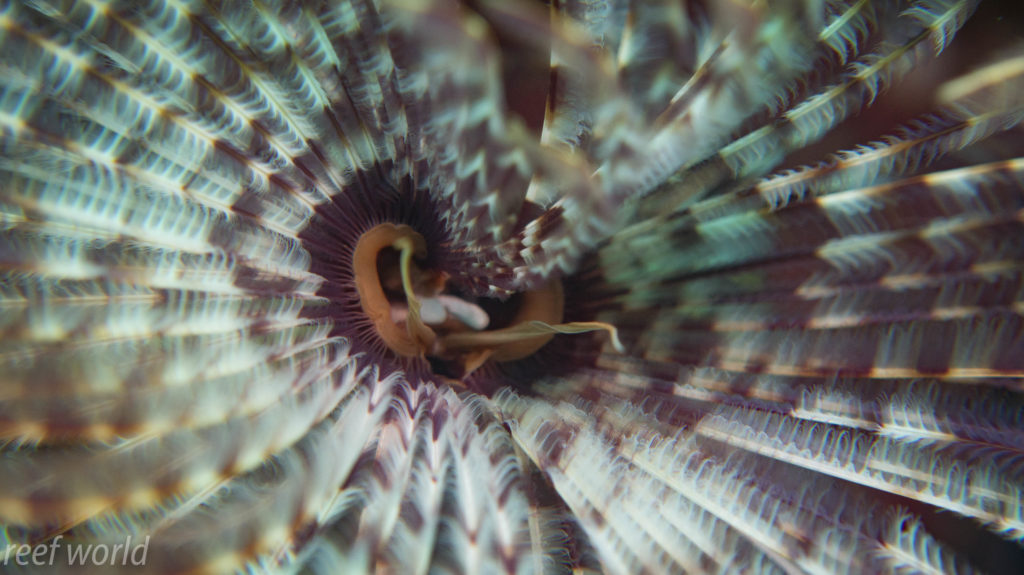
 The Feather duster worm, is a segmented worm, that could be seen on every snorkel or dive site in St. Lucia. From rocks, to coral heads to also even pilings and man implemented things, feather duster worms are everywhere. Many would quickly think it is a plant. The feathery tentacles are nothing more than the visible part of the feather duster worm. Each tentacle is called a radiole.
While drifting to the direction of the currents, feather duster worms trap plankton. The plankton is then moved to the mouth of the worm. The smallest particles goes to the stomach, the largest are discarded and the middle sized ones are used in making the tube.
If a predator, diver or anything passes close to these “tentacles,” they retract into a tube. This tube in turn closes over them. Having no obvious eyes, the feather duster worm is obviously very light sensitive. This means their reaction is based on light sensitivity. Nerve cells allow for such reaction to take place. The worm actually grows to about 25cm. When fecal matter form the feather duster worm is excreted via the rear end of the worm, then moved to the ventral side of their abdomen.
It is then twisted around, and passes on the dorsal side, at which point the pellets are excreted via the mouth and washed away. Along the same tube which carries fecal pellets, sperm and eggs are passed out and disbursed into the water column. Fertilisation is a random process and the larvae at first is nothing more than a planktonic speroid, with flagella and cilia. They are not even remotely close to looking like a worm. Little by little as they age, they add segments until they drop out of the plankton stage and begin their life as a feather duster worm.
The Feather duster worm predators includes but are not limited to black banded ribbon worms, some types of fish, wrasses and hawkfish. Butterflyfish specifically is a big predator on the Feather Dusters.