Lionfish
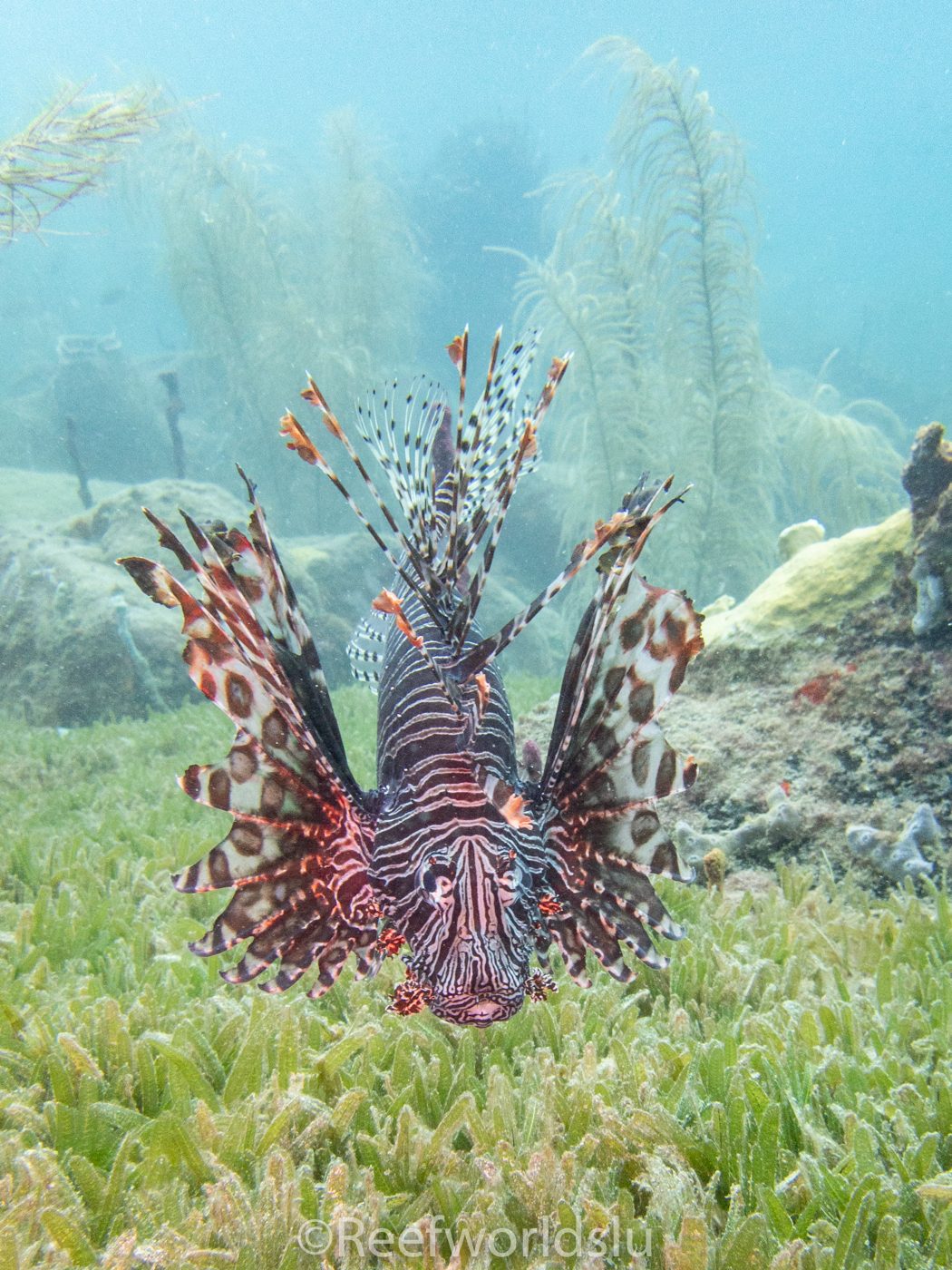
Red Lion fish in the Caribbean is a common siting now. These fish are invasive to not only the Caribbean Sea, East coast of USA, Brazil, East Mediterranean and more. The invasive fish, has been creating a wave of problems, as they have no natural predators in the water.The fish was introduced to the waters by the aquarium , where a hurricane destroyed an aquarium and they were swept into the seas, where they have been flourishing since. Another way is from the cargo ships that frequent these waters as well. These fish are red with dark red stripes. However, underwater, they can vary in colours, as with depth. They also can be extremely dark especially if they inhabit a dark environment. The Red lion fish can grow up to 47cm (18.5″) in length.
These fish can live a life span of 10 years. These fish contains venomous spines in their fins, which looks like a lion’s mane. These fish form aggregations containing at least 1 male to 7 females, during courting. During the mating, period, the female releases 2 egg masses, containing sometimes up to 30,000 eggs and more in warmer periods. These egg masses are fertilized by the male lion fish, before it floats to the surface.
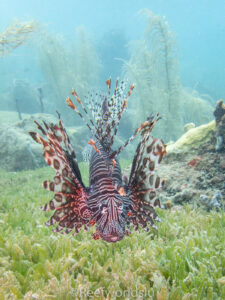
Lionfish drifting over the grass beds
The embryos secrete adhesive mucus which allows the egg mass to be attached near by intertidal rocks and coral, before hatching. Like we mentioned earlier, the lion fish is venomous and while the sting is not fatal to some, as everyone is different, especially if you have medical conditions. If you are stung, it is recommended to soak the affected area in hot water. The sting is extremely painful and it is also highly recommended you seek some medical help.
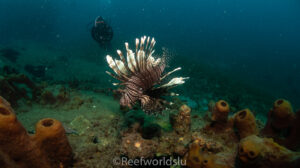
Lionfish hunting on the wreck
The lion fish is edible, however you first need to cut off the spines (fins) of the fish, which will not make it a regular fish to be cleaned and cooked as you wish. The meat is white and light and is very delicious. Persons are urged to use pole spears to help decrease the population of the lion fish, where ever they go and they are invasive. To store them as you shoot, you will use a zookeeper, which is a think PVC material cylinder with a funnel like opening, where the fish goes in and the once you pull the pole spear out, the fish stays in the cylinder and the pole spear is ready for the next fish.