
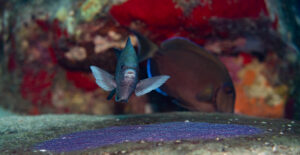
Sergeant major on high alert, guarding its eggs.
In abundance on the reef you will find Silver bodied fish with a spot of yellow on the top dorsal area and 5 black stripes going across the fish. From Jetties to mangroves and on coral reefs, Sergeant Majors are in abundance. The Sergeant Majors feed on the drifting plankton, algae, invertebrates, eggs off of rocks, floating insects and also tiny fish on occasion.
Females and males are indistinguishable visually, except during courtship and spawning, where males take a blueish, purplish colour and become very territorial until the eggs hatch. They mate year round and it is not known what triggers the mating. The mature male prepares a nest on marine walls, beneath overhangs or even as a last resort, hard sea floor. Once they have selected a site, the male sergeant major begins the process of clearing and cleaning the site. These fish remove everything in its path, from mollusk, tube-worms and hydroids by mouth. Larger objects are dragged or head butted to the side.

Sergeant major fanning its mature eggs
After all the cleaning, fanning and finning of debris out, the males advertise for egg laden females. The courtship is random and males dart erratically back and forth across their territory. A white patch appears on the suitor’s head and cheeks and during the spawning phase, white blotches often appear on the males’ bodies and similar marking do occasionally appear also on females. The males perform a series of loops to kindle an interest from the females. A single female can reproduce up to 20,000 eggs. Sometimes up to 4 different females can contribute in a single nest. Each fresh clutch of eggs would be laid adjacent to the the most recent batch.The eggs are a purplish, pinkish colour when just laid and fresh. As they mature, they become a clearer and you can also on close observation see the eyes of the newly form fry.
To ensure survival of the clutches, the fish fan their fins on the eggs and chase away any predators such as slippery dicks, blue head wrasse, blue striped grunt, red lip blennies and other sergeant major. Even sea urchins and crabs are not to be trusted from eating the eggs. The sergeants major females leaves the males to exclusively take care of the eggs. Aside from defending the eggs, the males also pick out infertile and damaged eggs, but mainly defends the nest from predators.
Males care for the eggs 6 to 8 days, based on the clutch numbers. after the eggs have matured it takes 12 hours before the wiggle their way out of the eggs and are free. After they hatch, the males leave the nest and fish eat the tattered remains of the eggs.

freshly laid sergeant major eggs
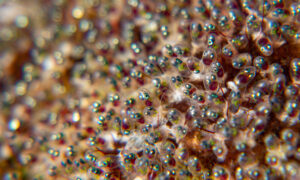
mature sergeant major eggs